Copyright © HT Digital Streams Limited
All Rights Reserved.
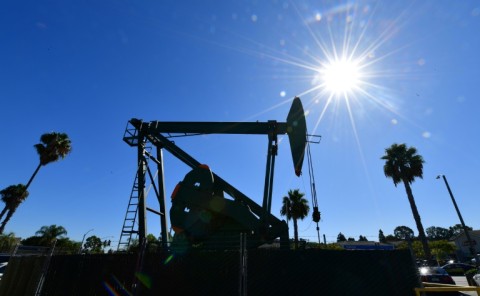
Crude prices had surged to a high of $76 per barrel in June, from a four year low of $60 per barrel in May. (Reuters)
Summary
With anticipated increases in global oil prices, India is proactively expanding its strategic petroleum reserves.
New Delhi: As global oil markets brace for fresh volatility amid tightening supplies from a big oil grouping and impending US sanctions on Russian majors Rosneft and LUKOIL, India is quietly moving to fortify its energy security architecture.
With Brent crude trading subdued, below $65 per barrel, and with anticipation of increase in prices due to tightening supplies, India is looking to seize the moment to refill and expand its strategic petroleum reserves, two people aware of the development said. Crude prices had surged to a high of $76 per barrel in June, from a four year low of $60 per barrel in May.
“There is an effort to boost the reserves in order to ensure energy security as prices are relatively lower now,” the first person cited above said on condition of anonymity. “Although availability of oil is not a matter of concern for India, prices are likely to increase going ahead.”
The second person added that in the past few months, the government and the Indian Strategic Petroleum Reserves Ltd (ISPRL) have already been making efforts to fast-track procurements for the strategic reserves.
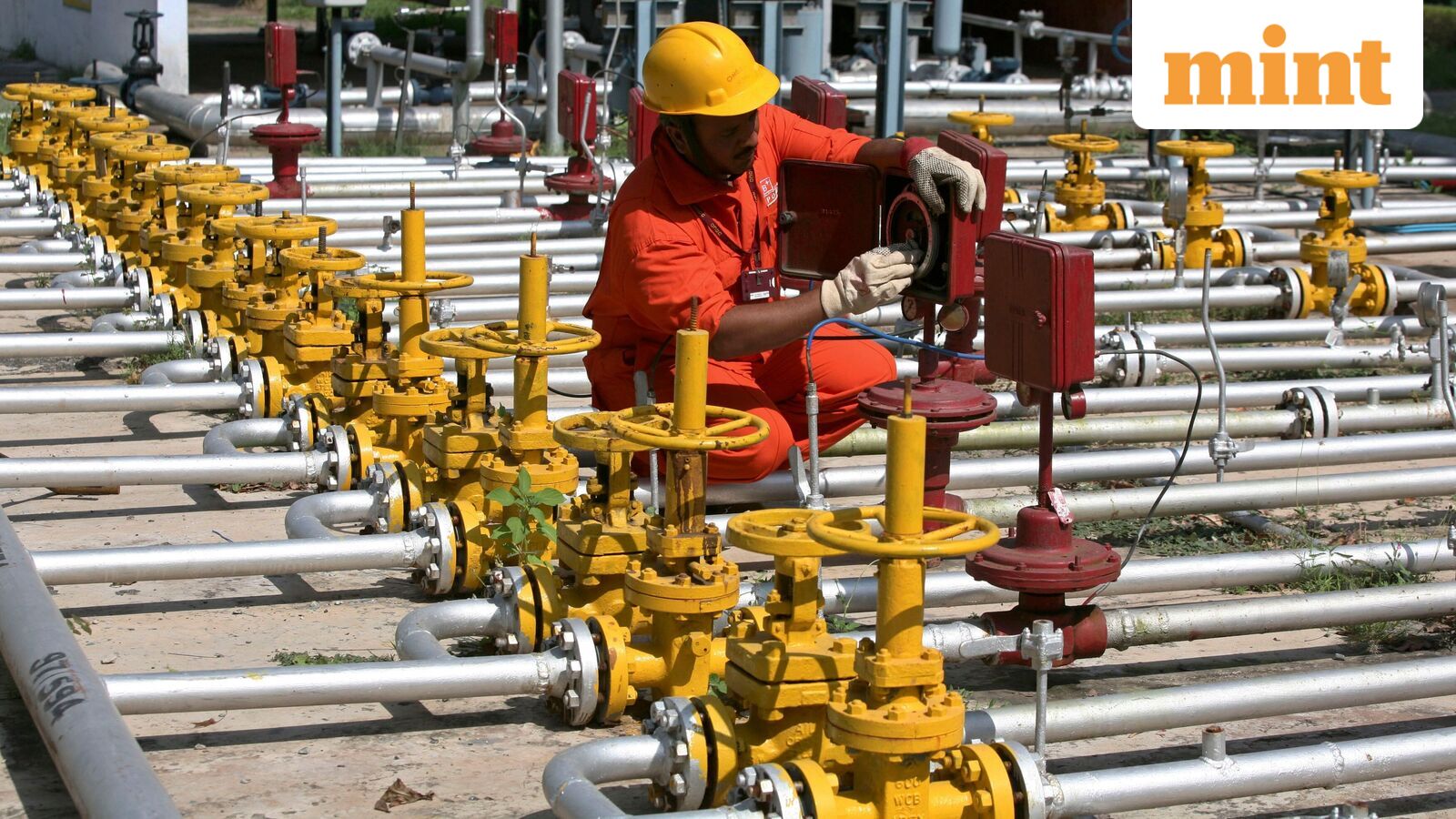
India’s current reserve capacity is 5.3 million tonnes, but only 3.6 million tonnes were stored in its underground caverns as of October 2024, according to a report by a parliamentary standing committee.
To be sure, India, which currently has three places storing crude, has already planned to build two more reserve locations that would more than double its storage capacity.
Queries emailed to the Union ministry of petroleum and natural gas and ISPRL remained unanswered till press time.
“Strategic reserves are meant to play a crucial role in case any serious geopolitical scenario emerges and concerns of any instability come up,” H.P.S. Ahuja, former managing director and chief executive officer of ISPRL, said. “When prices are low, they are usually filled. In a bid to fast-track procurements, OMCs which buy crude on behalf of ISPRL may increase the quantum of purchase.”
ISPRL, a government-owned entity, manages crude procurement and storage based on decisions by an empowered government committee. State-run oil companies assist in terms of procurement of the oil, and the fund is provided by the government.
Prices projected to rise Prashant Vasisht, senior vice president and co-group head for corporate ratings at rating agency Icra Ltd noted that with a significant portion of supplies out of the market as sanctions on Russia’s Rosneft and LUKOIL kick in starting November 21, prices are likely to go up in days ahead.
“Already there has been some upward movement, and prices are likely to go higher. Along with the fact that Russian suppliers were providing discounts, the tightening of supplies would also have some impact on the prices globally.” said Vasisht.
Going ahead, experts predict a rise in crude prices. One, oil buyers, including Indian refiners, are expected to rein in Russian oil purchases starting 21 November due to US sanctions, reducing effective supply in the market.
Two, prices may also be impacted by the decision of the Organization of Petroleum Exporting Countries and its allies or OPEC+ to pause output hikes during the January-March quarter, even as it announced an increase of 137,000 barrels per day for December.
“Beyond December, due to seasonality, the eight countries also decided to pause the production increments in January, February, and March 2026 as detailed in the table below,” said an OPEC statement on 2 November.
Indian refiners, which have been sourcing most of their oil from Russia, are expected to increase procurements from West Asia, Brazil, West America and the US, according to Sumit Ritolia, lead research analyst, refining & modeling global real-time data and analytics provider Kpler.
He said although higher freight costs could limit the scale of substitution by eroding arbitrage opportunities, refiners are likely to broaden their import baskets.
Oil bill impact India’s move also gains significance as an increase in crude price has a significant impact on the economy. According to industry estimates, a $1 increase in crude prices usually leads to a $1.5 billion increase in India’s import bill.
A recent estimate by Icra suggested that replacing discounted Russian oil by market-priced crude may increase the country’s oil import bill by 2%. Given India’s crude imports were worth $137 billion in FY25, that would amount to an increase of $2.7 billion.
India, the world’s third largest oil buyer that imports nearly 88% of oil and 55% of its gas requirements. Fluctuations in global prices can significantly impact the country’s import bill, stoke inflation, and widen the trade deficit.
India’s strategic reserves The SPRs, located in Mangaluru, Padur and Visakhapatnam, combined with commercial oil stocks held by refiners and marketers, account for an estimated 70–72 days of crude inventory. It, however, falls short of the International Energy Agency’s 90-day benchmark, required for full IEA membership. India, which joined the IEA as an associate country in 2017, sent a formal request for full membership in October 2023.
Work is already underway for construction of more reserves. Mint earlier reported that multiple energy and engineering giants, including Indian Oil Corp., Trafigura, Vitol, and Larsen & Toubro Ltd have shown interest in developing a 4 million tonne strategic crude reserve at Chandikhol, Odisha.The project is part of the second phase of ISPRL.
In 2021, the Union cabinet approved developing commercial and strategic reserves at Chandikhol (4 mmt) and Padur (2.5 mmt) in public-private mode. As reported by Mint, several companies including L&T, Indian Oil and Trafigura have shown interest in developing the Chandikol project. And the Padur project has been awarded to Megha Engineering & Infrastructures Ltd (MEIL).
In June, Mint also reported that India is doubling down to build new strategic petroleum reserves at six proposed locations in the quest for energy security, and the government has asked state-run Engineers India Ltd (EIL) to make detailed feasibility reports (DFRs) on the new reserves.
Catch all the Business News, Market News, Breaking News Events and Latest News Updates on Live Mint.
Download The Mint News App to get Daily Market Updates.
more
topics
#Oil
Read Next Story
https://www.livemint.com/news/india-moves-to-refill-strategic-oil-reserves-as-crude-prices-expected-to-rise-11762422918695.html