Live
By Charles Kennedy – Dec 17, 2025, 4:23 AM CST
Updated: Dec 17, 2025, 7:12 AM CST
Trump’s announcement of a blockade on sanctioned Venezuelan tankers pushed WTI crude up more than 2.4%, reflecting heightened geopolitical risk premiums.
The move could ultimately disrupt a sizable share of Venezuela’s exports, cutting into global supply.
Despite the escalation, broader bearish forces, including weak Chinese demand and optimism surrounding Ukraine peace talks, are likely to limit any rally.
Prediction Markets Bet on Maduro Exit in 2026 The “smart money” on prediction markets is reacting to the blockade news, with total betting volume on Nicolás Maduro’s ouster surging to nearly $26.5 million on Polymarket.
The crypto traders are betting that Maduro can weather the immediate storm but will succumb to the pressure next year.
End of 2025: Confidence in an immediate exit remains low, with odds of him leaving by December 31, 2025, hovering at just 4% . The Shift: Sentiment flips aggressively entering the new year. The implied probability of Maduro being ousted jumps to 19% by January 31, 2026, and nearly doubles to 41% by March 31. Long Term: By the end of 2026, the market now favors regime change, giving it a 56% chance. Following the White House’s blockade announcement, bets on 2026 timeframes rallied across the board. The March 31, 2026 contract saw the most aggressive action, rising 5% overnight, though it remains roughly 20% below its all-time high.
The data suggests the market views the U.S. blockade not as a “knockout blow” for this month, but as a suffocating strategy expected to break the regime’s back in the first quarter of next year.
1m ago – 7:11am CST
EU Parliament Approves Complete Phase-Out of Russian Gas Imports While the oil market fixates on Venezuela and the potential for new U.S. sanctions on Russia, a massive structural shift for global energy markets just cleared a major hurdle in Brussels.
The European Parliament voted overwhelmingly today (500 to 120) to approve a hard ban on Russian gas imports, mandating a complete phase-out by late 2027.
This is the logistical “point of no return” for Europe’s decoupling from Moscow. Russia, which supplied 45% of the bloc’s gas before the 2022 invasion, is now down to about 12%, but countries like Hungary, France, and Belgium still receive significant volumes.
Crucially, this legislation is designed to pass with a “reinforced majority,” a mechanism specifically engineered to bypass vetoes from Hungary and Slovakia, who have fought to maintain ties with the Kremlin.
The move signals a broader acceleration of Europe’s energy divorce from Russia . The European Commission has already signaled it will propose similar legislation in early 2026 to formally phase out remaining Russian oil imports, adding yet another layer of long-term bearish pressure on Moscow’s energy revenue.
Final approval from EU ministers is expected early next year.
18m ago – 6:53am CST
U.S. Threatens “Shadow Fleet” Sanctions to Force Peace Deal Oil markets saw a flash of volatility this morning as the U.S. reportedly prepared a “nuclear option” for its peace negotiations with Russia, a fresh wave of sanctions targeting Moscow’s energy sector if Vladimir Putin rejects a ceasefire agreement.
Combined with the shock of Trump’s Venezuela blockade, this fresh geopolitical threat propelled oil prices up by as much as 2.5% in very early trading, though the momentum has cooled slightly as U.S. trading desks came online and the initial panic settled.
Sources indicate the potential measures would aggressively target Russia’s “shadow fleet” of tankers and the traders who facilitate their movements—mechanisms that have kept Russian oil flowing despite previous restrictions. Treasury Secretary Scott Bessent reportedly previewed the plan with European ambassadors this week, positioning the sanctions as the consequence for walking away from the table.
The threat comes as U.S. envoy Steve Witkoff and Ukrainian President Volodymyr Zelenskyy make reported headway on security guarantees in Berlin. However, massive sticking points remain that could derail the deal and trigger the sanctions—specifically the status of the Donbas region, the management of the Zaporizhzhia nuclear plant, and the contentious use of frozen Russian central bank assets.
While the news triggered a knee-jerk price rise, the market remains heavily bearish overall, with Brent down roughly 20% this year.
Traders appear cautious, weighing the immediate supply risk of a crackdown on Russian tankers against the potential demand-sapping effects of a continued war or a fragile peace.
1h ago – 6:08am CST
Chinese Buyers Demand Deep Discounts as “War Clause” Costs Spike The conflict is effectively pricing Venezuela’s state-run oil company, PDVSA, out of its most critical market, with Chinese refiners now demanding massive price cuts to offset the soaring risk of cargo seizure.
Traders report that discounts on Venezuela’s flagship Merey heavy crude bound for China have widened aggressively, reaching up to $21 per barrel below benchmark Brent prices …a steep jump from the $14-$15 discount seen just last week.
The plunge is largely driven by ship owners adding “war clauses” to contracts to cover the financial risk of U.S. interception, following the Coast Guard’s seizure of the tanker Skipper and the new blockade order.
The economic squeeze is creating a logistical logjam.
More than 11 million barrels of Venezuelan crude are currently stranded on vessels waiting to leave as traders haggle over terms. Buyers are reportedly using their leverage—bolstered by easy access to cheap Russian and Iranian oil—to force PDVSA to drop its requirement for prepayment in digital currency.
Adding to the chaos, PDVSA’s administrative systems were hit by a cyberattack this week, forcing a temporary suspension of deliveries at its terminals.
Amid the paralysis, only one operator appears immune: Chevron. LSEG data confirms the Chevron-chartered tanker Ionic Anax set sail for the U.S. on Tuesday without issue, highlighting that the U.S. major remains the sole entity moving crude out of Venezuela without delay.
1h ago – 5:53am CST
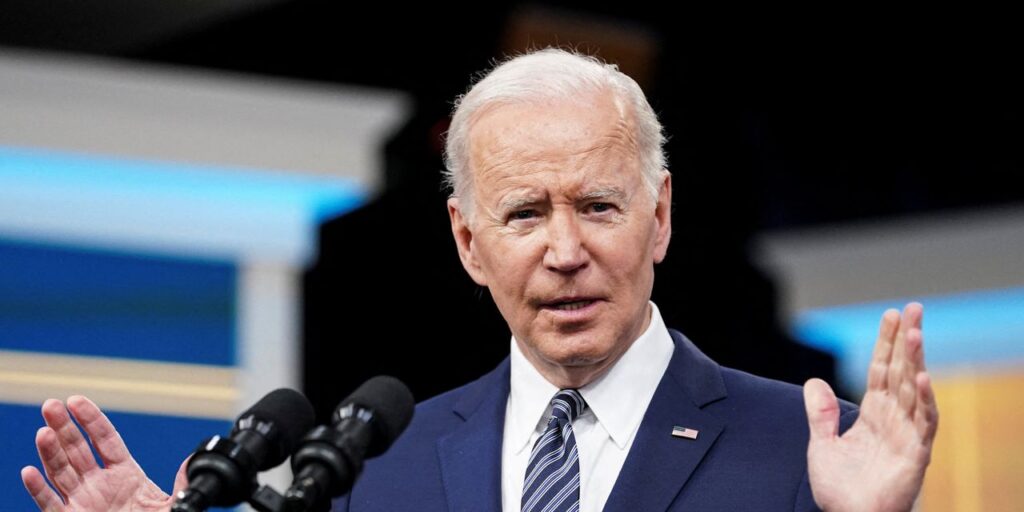
Trump Drops the Hammer, Targets the Foundation of Venezuela’s Oil State President Donald Trump escalated his pressure campaign against Nicolás Maduro on Thursday, ordering a “total and complete blockade” of all sanctioned oil tankers entering or leaving Venezuela. In a dramatic statement posted to social media, Trump accused the Venezuelan government of “drug terrorism,” “human trafficking,” and the theft of U.S. assets, while declaring the Maduro regime a foreign terrorist organization. The directive follows the U.S. seizure of a Venezuelan-linked tanker in the Caribbean earlier this month—an operation Trump described as “the largest one ever seized.”
The move marks a significant shift in Washington’s strategy. Rather than solely pressuring Maduro to step down, the administration is now targeting the legal and structural foundations of Venezuela’s oil sector, including its historic 1943 Hydrocarbons Law, which enshrined national control over oil resources.
In a reaction to U.S. President Trump’s social media statement, Eurasia Group’s Greg Brew concluded that Trump is now effectively calling for Venezuela to rescind the 1943 Hydrocarbons Law.
Trump has moved way past demanding Maduro’s exit, he’s now calling for Venezuela to rescind the 1943 Hydrocarbons Law. https://t.co/bKZggVV40y
— Gregory Brew (@gbrew24) December 17, 2025 Analysts say Trump’s escalation comes at a moment of relatively low global oil prices, reducing the risk of market disruption and giving the White House confidence that tightening enforcement will not spark an energy shock. Venezuela’s production has already fallen to a seven-month low amid tanker seizures and sanctions targeting shipping firms assisting PDVSA’s exports.
China—Venezuela’s largest oil customer—has sharply increased crude stockpiles this fall, a move analysts see as a buffer against U.S. enforcement actions. Beijing condemned Washington’s tanker seizure as “international piracy” and warned that U.S. military activity near Venezuela threatens both regional stability and China’s long-standing investments there. While avoiding direct involvement in the incident, China remains deeply exposed: roughly 80% of Venezuela’s exports ultimately feed Chinese refiners through sanction-evading routes. Beijing is expected to continue offering economic and diplomatic backing to Caracas while keeping its distance from any military confrontation.
2h ago – 5:29am CST
White House Chief Reveals Regime Change Goal in Bombshell Interview White House Chief of Staff Susie Wiles confirmed that President Trump’s escalating naval campaign off the coast of Venezuela is designed to force President Nicolás Maduro from power, telling Vanity Fair in a profile published on Tuesday that the strategy is to “keep on blowing boats up until Maduro cries uncle.”
The admission contradicts the administration’s official diplomatic stance, which has framed the recent blockade of oil tankers and strikes on vessels as strictly “counternarcotics” operations aimed at stemming the flow of illicit drugs.
Wiles detailed a November 4 Oval Office meeting with Vice President JD Vance and Secretary of State Marco Rubio where the agenda was explicitly focused on “forcing Venezuelan president Nicolás Maduro from power.”
While the White House has faced international criticism and allegations of war crimes for destroying vessels in the Caribbean, some of which critics claim are civilian fishing boats or oil transports, Wiles defended the approach.
She argued that the administration views the destruction of these vessels as saving lives by preventing drug distribution, though she acknowledged the legal limitations of the campaign.
Wiles drew a sharp distinction between the current maritime interdictions and a potential ground invasion, noting that the latter would trigger the need for a formal declaration of war.
“If he were to authorize some activity on land, then it’s war, then [we’d need] Congress,” Wiles said.
Her comments suggest the “total blockade” of sanctioned oil tankers announced today is likely to remain the administration’s primary lever for pressure, keeping the conflict offshore to avoid a clash with Capitol Hill while tightening the economic noose around the nation’s oil-dependent economy.
2h ago – 5:29am CST
Blockade Severs Critical Naphtha Lifeline Signs that the U.S. pressure campaign was effectively closing off Venezuelan waters emerged even before yesterday’s official blockade order.
Tracking data from LSEG shows the Benin-flagged tanker Boltaris turned around in the Atlantic late last week, abandoning its delivery of 32,000 tons of Russian naphtha. The vessel is now heading back toward Europe.
The diversion likely came in response to the U.S. seizure of a sanctioned tanker just days earlier…a prelude to today’s escalation.
This pre-emptive retreat highlights the fragility of Venezuela’s supply chain. The country relies on these Russian naphtha imports to dilute its extra-heavy crude for export. If the mere threat of seizure was enough to turn the Boltaris around last week, today’s “total blockade” declaration could freeze these critical Russian inputs entirely.
2h ago – 5:07am CST
Ukraine Confirms Another “Deep Strike” On Russian Oil Refinery Fresh supply jitters hit the market overnight as Ukraine’s General Staff confirmed a successful “Deep Strike” on the Slavyansk-on-Kuban oil refinery in southern Russia.
A video circulating on Telegram showed the facility in flames.
Located near the Black Sea in the Krasnodar Krai region, the refinery processes roughly 5.2 million tonnes of crude annually and is a vital supplier for Russian military forces.
While Russia’s Defense Ministry claims to have intercepted 31 drones overnight, the damage on the ground is evident. Local officials reported that the strikes knocked out power for more than 38,000 residents and injured two people.
A New Normal? This appears to be part of a rapidly widening campaign against Russian energy infrastructure. It comes just days after a similar strike on the massive Slavneft-Yanos refinery and follows last week’s brazen attack on Russian assets in the Caspian Sea .
That Caspian strike, also executed with “Deep Strike” capabilities, signaled that Kyiv can now threaten targets previously considered safe in the deep rear. With explosions also reported overnight in the Saratov region, it is becoming clear that despite talk of peace negotiations, Russian oil logistics remain under active, long-range fire.
2h ago – 4:53am CST
European Oil Majors Lead Pre-Market Rally Energy equities are surging in pre-market trading, though there is a clear divergence between European and U.S. supermajors as investors digest the implications of the Venezuelan blockade.
European giants are outperforming:
BP is leading the pack, up 2.7%.
Shell has gained 2.0%.
Equinor (EQNR) is up 1.78%.
TotalEnergies (TTE) has risen 1.63%.
In contrast, the American heavyweights are seeing more muted buying interest. Exxon Mobil (XOM) is up 0.98%, while Chevron (CVX) is lagging the group, up only 0.84%.
The underperformance of Chevron is notable. While higher oil prices generally lift the sector, Chevron is the only major U.S. oil company with significant active operations in Venezuela under a specific OFAC license. Investors may be proceeding with caution regarding how a “total blockade” could impact those specific logistical channels.
3h ago – 4:41am CST
Traders Eye Shorting Opportunity; Analysts Downplay Long-Term Impact While oil prices have jumped on the blockade news, market participants are skeptical the rally will hold. Some traders suggest the move is largely “sentiment-driven,” noting that Venezuela accounts for only a small percentage of global output.
“With all eyes on the Russia-Ukraine discussions, the market is still under downside risk,” one trader noted. Another added that the temporary spike “might be a good opportunity for some to build short positions.”
Analysts echo this caution. Emril Jamil, senior oil analyst at LSEG, stated that an “extreme price rally is unlikely” barring wider retaliatory actions, as a global supply glut remains the primary focus. Muyu Xu of Kpler added that while China—Venezuela’s largest buyer—faces disruption, ample supply in the broader sanctioned oil market should cap any significant price surge.
Uncertainty also looms over enforcement. It remains unclear if President Trump will deploy the Coast Guard to interdict vessels as seen last week, or how the “blockade” will distinguish between the shadow fleet and licensed carriers like Chevron.
WTI is currently up 2.57%, at $56.69, while Brent is sitting at $60.33, up 2.39%
3h ago – 4:35am CST
Oil Prices Surge 2.5% as Trump Orders Blockade of Venezuelan Tankers Oil prices rose more than 2.4% on Wednesday after President Trump ordered a “total and complete blockade” of all sanctioned tankers entering and leaving Venezuela, raising risks of prolonged supply disruptions in the region.
At the time of writing, WTI crude had jumped by 2.44% to $56.62 …
While Brent crude prices had climbed by 2.27% to $60.26.
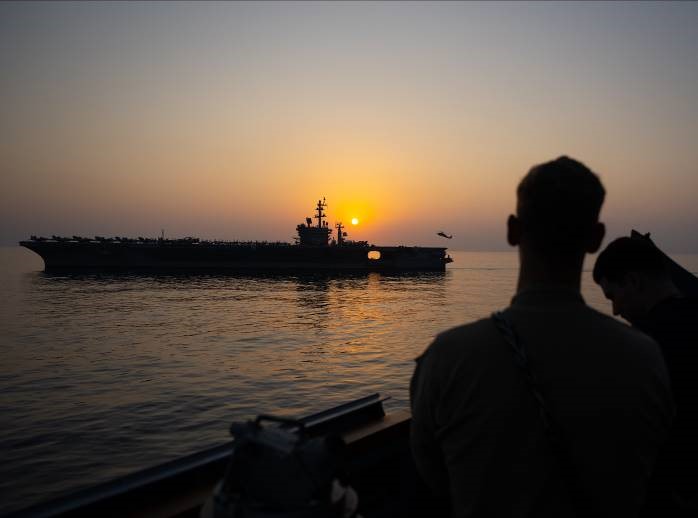
In a post on Truth Social, Trump labeled the Venezuelan government a “foreign terrorist organization”, justifying the move as part of an effort to combat illicit activities that he alleges are tied to the Maduro regime, including drug smuggling and human trafficking. He added that the “largest Armada ever assembled in the history of South America” will only get bigger until the country returns oil, land, and assets that Trump alleges belong to the U.S.
“The move marks a significant escalation in U.S. pressure on Venezuela and follows the recent seizure of a tanker, raising the risk that prolonged disruptions could affect exports of roughly 590,000 barrels per day, most of which are destined for China,” said Soojin Kim, an analyst at Japan’s MUFG.
The Venezuelan government has yet to issue an official response to Trump’s latest escalation, though President Nicolás Maduro had earlier dismissed U.S. actions as attempts to colonize Venezuela’s vast oil wealth.
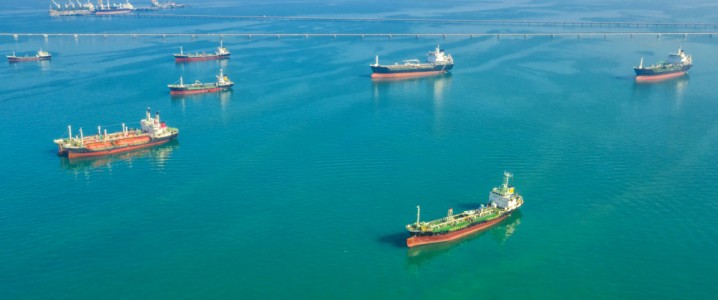
While the blockade targets only sanctioned vessels, part of a long-standing “shadow fleet” used to evade restrictions, it could disrupt a significant portion of Venezuela’s roughly 850,000 barrels per day in exports, primarily to China. Chevron’s licensed operations sending crude to the U.S. are expected to remain unaffected for now.
This action comes less than a week after U.S. forces seized a sanctioned oil tanker off Venezuela’s coast, part of a broader pressure campaign aimed at crippling the South American nation’s oil-dependent economy.
The oil market had been trading near multi-year lows, with prices pressured by signs of potential progress in Russia-Ukraine peace talks and weak economic data coming out of China. The broader bearish sentiment in markets has kept the upside risk to oil prices limited and, short of further action to back up Trump’s latest rhetoric, there is unlikely to be a major rally.
3h ago – 4:28am CST
Download The Free Oilprice App Today
Back to homepage
Charles Kennedy
Charles is a writer for Oilprice.com
More Info
https://oilprice.com/Energy/Energy-General/Oil-Prices-Spike-as-Trump-Orders-Blockade-of-Sanctioned-Venezuelan-Oil-Tankers.html