Airlines in Thailand plan to cut a significant number of flights from May to curb losses stemming from surging jet fuel prices.
The US-Iran conflict, which erupted two months ago, has triggered an oil price shock, sharp rises in the cost of living and widespread flight cancellations worldwide.
As the jet fuel crisis deepens, airlines including those in Thailand are continuing to cut flight capacity for the coming months. The conflict is reshaping capacity planning across both airlines and airports.
HOW ARE THAI AIRLINES AFFECTED BY THE GULF CONFLICT?
Sarun Benjanirat, deputy director of the Civil Aviation Authority of Thailand (CAAT), said all airlines face similar cost pressures, even if they are not directly affected by Middle Eastern airspace closures in their flight operations.
Even during normal periods, he said airlines typically operate on thin profit margins of only 2-3%.
In Thailand, the most profitable period is concentrated in the high season, which spans parts of the first and fourth quarters of each year.
Airlines typically earn lower profits, or even incur losses, during the low season from April to October. As a consequence, the revenue and profits generated during the limited peak period are crucial to sustaining operations throughout the rest of the year.
The outlook has become more challenging as jet fuel, which typically accounts for around 30% of airline operating costs, has more than doubled since the conflict began two months ago, said Mr Sarun.
While some routes are usually profitable during this period, rising costs have pushed them into loss-making territory, he said, forcing Thai airlines to gradually trim capacity across both domestic and international services, either by cutting unprofitable routes or operating certain routes at reduced capacity through flight consolidation.
HOW ARE AIRLINES ADJUSTING THEIR SHORT-TERM PLANS?
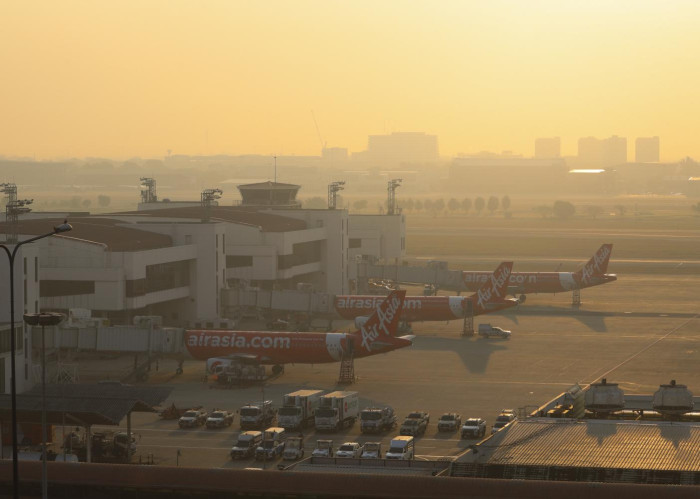
According to aviation consultancy Cirium, Thai AirAsia was among the top five airlines out of 100 global carriers with the largest flight reductions for May.
The airline plans to reduce capacity next month by nearly 15 percentage points compared with earlier plans, resulting in a year-on-year decline of 10%.
Mr Sarun said the scale of the flight cuts may also reflect the airline’s position as the largest low-cost carrier in Thailand, with the highest share of the domestic market.
Cirium reported globally airline capacity in May was downgraded by three percentage points, leaving growth of just 3.4% year-on-year.
Among the world’s 20 largest carriers, all airlines except Turkish Airlines are trimming their flights in May.
The Lufthansa Group even halted operations of Lufthansa CityLine, which operates 27 aircraft, in order to cut losses.
The consultancy said there will likely be a significant slowdown in traffic this year as the Mideast conflict remains unresolved. Possible scenarios range from a 2-3% decline to 1-3% year-on-year growth.
The reduction in commercial flight capacity is also affecting airports such as Phuket, which could see flight numbers fall by up to 10% year-on-year as airlines slow their expansion plans, said airport general manager Monchai Tanode.
Between April 1-20, the airport recorded year-on-year declines of 1.4% in domestic flights and 8% in international flights, with overall flights down by 4.8%. As a result, total passenger numbers dropped by 6.8% year-on-year.
Mr Monchai said he remains optimistic about a rebound in travel during the cool season as no airlines have requested to surrender flight slots. In fact, he said some foreign carriers are even inquiring about the availability of additional slots.
WHAT ARE THE AUTHORITIES DOING TO MITIGATE THE IMPACT?
Thai airlines are calling for measures to help ease their cost burden, such as reducing or waiving fees related to flight operations.
Mr Sarun said the CAAT is already coordinating with relevant organisations and stakeholders to support airlines and maintain growth in the Thai aviation industry, with measures under consideration including reductions in the jet fuel excise tax, aircraft parking fees and navigation fees.
These measures aim to prevent mass cancellations as tighter supply leads to higher airfares for travellers, which could further dampen travel demand.
He said the situation has not yet become severe for Thai airlines, as they have avoided grounding aircraft or removing them from their fleets, unlike some European carriers that needed to cut costs.
Mr Sarun said Thai airlines believe returning grounded aircraft to service would place an even greater burden on operations once conditions normalise.
According to Cirium, older and less fuel-efficient aircraft are more likely to face utilisation cuts or be parked.
Deliveries of new aircraft should not be affected as modern models offer significantly better fuel efficiency than older jets, noted the consultancy.
Pinyot Pibulsonggram, vice-president of commercial and customer service at Vietjet Thailand, said the airline has one of the youngest fleets in the country, with its new Boeing 737 Max 8 jets helping it to operate more efficiently than older aircraft types, although it is expecting weaker passenger numbers.
Nok Air said it is maintaining its plan to acquire two new jets by the end of this year.
Pongpan Buripakdi, chief commercial officer at Nok Air, said the airline remains confident about long-term growth and a rebound in demand, as it plans to resume international flight operations in the third quarter.
Passengers affected by flight cancellations or delays are advised to follow the CAAT’s guidelines.
Airlines are required to provide care and compensation to passengers, depending on the duration of flight delays. In the event of flight cancellations, airlines must compensate passengers for the value of their tickets, either through credit shells, travel vouchers, or frequent-flyer programme miles.
However, airlines are not required to provide compensation if passengers are notified of cancellations and alternative routing at least three days in advance for domestic flights, or seven days in advance for international flights.
If passengers are informed within shorter notice periods, airlines must offer alternative flights to the destination with a departure time no more than three hours different from the original schedule.
https://www.bangkokpost.com/business/general/3243640/what-the-gulf-conflict-means-for-airlines