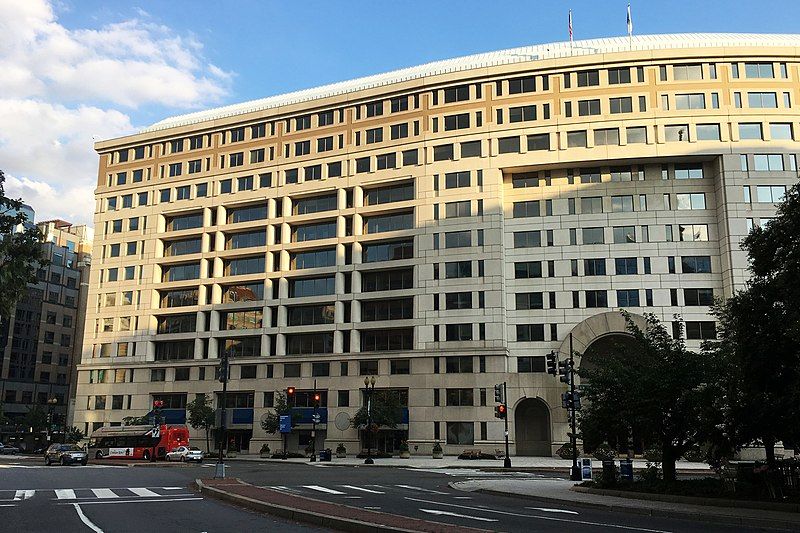
The Inter-American Development Bank (IDB) says the outlook for Guyana is still highly uncertain, given persistent geopolitical tensions that continue to push up international oil prices.
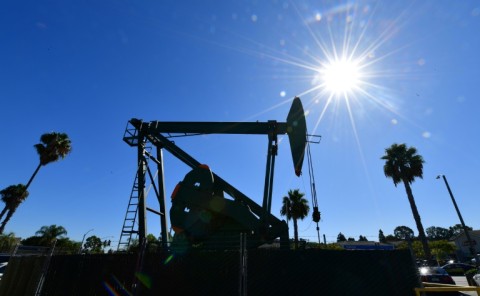
“Although Guyana transitioned to become a net oil exporter in 2019, the country still produces 90 per cent of its energy from imported oil. As a result, electricity and fuel prices continue to be channels through which the Guyanese economy can be negatively impacted,” the IDB said.
“Moreover, as Guyana is now an oil producer, oil shocks can lead to Dutch disease risks, spurred on by an influx of oil revenues and excessive government spending. Within this context, the IMF forecasts that Guyana’s gross domestic product) GDP growth expansion in 2026 will be smaller than originally predicted but with manageable macro-fiscal risks.”
In its report titled “Fiscal Resilience, Debt Reduction and Domestic Resource Mobilization in the Caribbean”, the Washington-based financial institution said that the Guyana government is helping to mitigate much of the current oil price shock through maintenance of a zero-rate tax on fuel promised in its 2026 budget, introduction of a new universal cash grant (US$500); maintenance of electricity subsidies and assistance to key sectors, including education.
“As a result, the government is expected to run a larger primary deficit than originally budgeted. Nevertheless, macro-fiscal risks are expected to remain largely contained given Guyana’s withdrawal rules, which limit oil profit withdrawals from its Natural Resource Fund; high concessionality of the debt portfolio; a low debt service ratio; and continued high GDP growth,” the report noted.
The IDB said it is also expected that inflation pressures in Guyana will increase. The International Monetary Fund (IMF) forecasts further deviation of the Guyana inflation rate from the US price trend, indicating the possibility of extended real effective exchange rate appreciation.
“This is a key barometer for Dutch disease risks. However, appreciation of Guyana’s real effective exchange rate has been relatively subdued, growing at an annual rate of about 0.01 per cent on average between 2019 and 2025, the same rate of growth as five years prior.
“In this regard, proactive and vigilant policy-making is highly advisable, despite the probability of larger-than-usual forecast errors and the possible unreliability of forward estimates.”
The IDB report notes that forecasts for this year could be unreliable because of the volatile geopolitical environment.
“Nonetheless, increased unpredictability naturally points to the need for careful economic management, including coordinated fiscal and monetary policies, especially in a context such as that of Guyana, which is so exposed to external energy price risks.
“In Guyana, balancing fiscal and financial sector support for development and growth with monetary efforts to stabilise the exchange rate, while also targeting acceptable levels of inflation, is of even greater importance in the current environment,” it said, adding that the government’s efforts to reduce the country’s import dependence, particularly on food and crude oil, are consistent with these policy objectives.
The IDB noted that Guyana’s output performance strengthened further in 2025, promoting socio-economic development while helping to insulate the country against increased global uncertainty and associated risks.
It said that Guyana released its 2024 Labour Force Survey and preview of the 2022 Household Census in April 2026, with the surveys respectively highlighting improved labour and population dynamics.
Guyana’s unemployment rate fell from 14.5 per cent in the third quarter of 2021 to 6.8 per cent during the same period in 2024. In addition, Guyana’s population increased to 900,000, up from 700,000 a decade earlier.
In 2025, Guyana’s GDP grew by 19.3 per cent. This followed an expansion of 43.8 per cent in 2024, surpassing initial IMF expectations of 10.1 per cent projected in October 2025. Oil output growth was slower at 21.1 per cent, mirroring the trend in international oil prices, but was buoyed by a ramp-up in oil production late in the fourth quarter as the sector welcomed the coming on stream of a new oil extraction vessel.
The IDB report said despite the deceleration in oil GDP growth, the mining and quarry sector’s share of the economy increased to 79 per cent, from 67 per cent in 2022 and 51 percent in 2021, while non-oil sector GDP growth continued to expand, increasing from 13 percent in 2024 to 15 per cent in 2025.
Price growth for Guyana was higher at the end of 2025, with inflation at 2.9 per cent year-over-year. Costs of miscellaneous items rose markedly during the period, but the average consumer price level was underpinned by a further increase in the price of food, which has had the greatest impact on inflation.
Food prices in 2025 rose by 4.4 per cent, medical care by 4.9 per cent, and miscellaneous items by 6.8 per cent. However, the latest data show that inflation pressure eased early in 2026 prior to the ramp-up in international oil prices. In February 2026, Guyana’s year-over-year inflation rate was 2.6 per cent, again underpinned by higher food prices, which rose by 5.9 per cent, but with headline price growth curtailed marginally owing to lower prices for education and transport and communication compared to the same month in 2025.
The government of Guyana’s fiscal deficit has improved, as reflected in the primary balance, which fell to minus five per cent in 2025 from minus 6.9 per cent in 2024. Higher overall expenditures, driven in part by increased transfer payments linked to the government’s issuance of universal cash grants (current expenditure), were offset by a larger increase in revenues— specifically, receipts of non-tax revenues, the majority of which were comprised of oil profit withdrawals (85.1 per cent).
Also underlying the improved fiscal outturn was lower capital spending. The report noted that in a bid to close its large infrastructure gap, Guyana has invested heavily, with capital spending jumping from 21.8 per cent of total expenditures in 2019 to 50.5 per cent in 2023 and 53.8 per cent in 2024, driving an overall fiscal expansion.
However, the IMF has recommended that the government bring these expenditures down, with the aim of balancing the books in the medium term. In 2025, capital spending as a share of total expenditure fell to 50.7 per cent, and as a share of GDP fell from 11.5 to 10.2 per cent, marking the first decline in the government’s capital expenditure ratios since oil production began.
Overall debt levels continue to be highly sustainable. The 2025 financing gap led to increased holdings of external debt and a slight increase in the total debt ratio to 28.6 percent from 24.3 percent in 2024. Consequently, the external share of total debt rose to 56.3 percent.
However, Guyana’s overall debt portfolio remained highly concessional, as the country’s debt continues to be held primarily by multilateral creditors (66.2 per cent). In addition, the government’s debt service costs have fallen significantly, from an average of around seven per cent to five per cent, comparing mean debt service to revenue ratios from 2014 to 2018 (pre-oil), and from 2019 to 2025, respectively. —WASHINGTON, D.C. (CMC)
http://www.guardian.co.tt/news/idb-says-persistent-geopolitical-tensions-affecting-guyanas-outlook-6.2.2650714.02cd311a45