More than half of the African economies tracked recorded lower inflation last month, extending the continent’s broadening disinflation trend, but a renewed surge in global oil prices above $100 per barrel is threatening to reverse some of those gains.
Nine of 16 economies recorded lower annual inflation in August than in July, compared with eight in July. Mozambique, Côte d’Ivoire, and Angola recorded the biggest declines, while inflation also fell in Nigeria, Egypt, Zambia, Zimbabwe, Ethiopia, and Botswana.
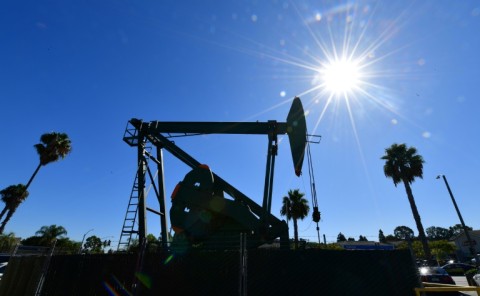
However, the improvement came before Brent crude prices climbed above $100 per barrel since the beginning of September as escalating tensions in the Middle East heightened concerns over global oil supplies. At the time of writing, Brent crude was trading at $107.8 per barrel, while West Texas Intermediate (WTI) stood at $95.46.
Crude oil prices started the week higher after President Donald Trump rejected Iran’s peace proposal, raising concerns that the conflict could continue and disrupt global oil trade.
This renewed energy shock could continue to put pressure on fuel, transport, electricity and food prices across African economies, potentially complicating the disinflation trend and making the next round of inflation data more important for many central banks.
The August figures show that price pressures were already moving in different directions across the continent. While nine economies recorded declines, seven — Ghana, Mauritius, Tunisia, Kenya, Uganda, Tanzania and South Africa — recorded higher inflation.
Mozambique records biggest decline
Mozambique recorded the sharpest decline among the 16 economies, with annual inflation falling to 6.45 percent in August from 7.48 percent in July.
Food and non-alcoholic beverages were a major driver of the improvement, with inflation in the category falling to 8.91 percent from 12.62 percent in July. Price growth also moderated across clothing and footwear, restaurants and hotels, and miscellaneous goods and services.
Côte d’Ivoire recorded the second-largest decline, with inflation falling to 1.2 percent from 1.9 percent, the lowest among the economies tracked.
Angola also extended its long-running disinflation trend, with inflation dropping to 8.78 percent from 9.33 percent, its lowest level since April 2015. In July, the Central African country entered single digit inflation.
The decline has been supported by relative stability in the kwanza and improved domestic supplies of essential goods.
The improvement has already allowed the country’s central bank to loosen monetary policy. The National Bank of Angola cut its key interest rate by 100 basis points to 14.75 percent earlier in the month, its third consecutive rate reduction.
Read also: Oil prices jump as Trump rejects Iran peace proposal
Nigeria, Egypt and Ethiopia still face high inflation
Nigeria recorded only a marginal decline, with inflation easing to 15.39 percent from 15.43 percent.
Although the annual rate barely changed, monthly price pressures moderated more significantly. Food inflation fell to 19.57 percent from 20.31 percent, marking the first monthly decline in seven months.
The improvement could, however, come under pressure from higher energy costs.
Africa’s most populous nation has already begun to feel the impact of the global oil-price surge. Rising crude prices have pushed petrol prices to about N1,400 per litre in Lagos and Abuja, while diesel has risen above N2,000 per litre, according to Reuters. Dangote Refinery also increased its wholesale petrol price to N1,350 per litre.
For consumers and businesses, higher fuel costs can quickly translate into higher transportation and logistics expenses, increasing the cost of moving food and other goods.
The Central Bank of Nigeria nevertheless cut its benchmark interest rate by 350 basis points to 23 percent in September, its biggest reduction since 2007, after inflation showed signs of moderating.
Egypt’s inflation also declined, falling to 14.5 percent from 14.9 percent.
Food and beverages inflation dropped to 6.3 percent from 8 percent, while transport inflation eased slightly to 24.4 percent.
The Central Bank of Egypt kept its key rate at 19 percent in August, extending its pause in monetary easing as geopolitical tensions continued to put pressure on the Egyptian pound and fuel import costs.
Ethiopia recorded a smaller decline, with inflation falling to 15.1 percent from 15.3 percent, its first decline in five months.
Despite these improvements, Nigeria, Ethiopia and Egypt remained among the continent’s highest-inflation economies.
Southern Africa records mixed results
The broader decline was also visible in Zambia, Zimbabwe and Botswana.
Botswana’s inflation fell to 9.3 percent from 9.4 percent, continuing its decline from a recent peak of 10.7 percent. Lower inflation in transportation, food and non-alcoholic beverages, alcoholic beverages and tobacco contributed to the moderation.
Zimbabwe recorded a decline to 2.9 percent from 3.2 percent, while Zambia fell to 6.2 percent from 6.5 percent.
South Africa, however, recorded a modest increase, with inflation rising to 4.4 percent from 4.3 percent.
Transportation remained the biggest source of upward pressure, while housing and utilities inflation stayed at 5.2 percent. Food inflation increased to 1.1 percent from 0.9 percent, its first rise since November 2025.
The development contributed to the South African Reserve Bank’s decision to raise its repo rate by 25 basis points to 7.25 percent on September 23, citing upside risks to inflation.
Read also: Oil majors sacrifice reserve growth to keep shareholders paid
East Africa bucks the decline
While inflation dropped in nine economies, three East African economies moved in the opposite direction.
Kenya’s inflation increased to 6.6 percent from 6.5 percent, Uganda’s rose to 4.1 percent from 4 percent, and Tanzania’s increased to 4.3 percent from 4.2 percent.
Kenya’s inflation remained above the midpoint of the central bank’s target range for a fifth consecutive month, with transportation remaining a significant source of pressure.
The country is particularly exposed to higher global oil prices because changes in international petroleum prices feed into domestic fuel costs and transportation.
Tanzania’s increase was driven by transportation, education, restaurants and hotels, furnishings and household equipment, and housing and utilities.
Ghana and Mauritius also see renewed pressure
Ghana recorded one of the sharpest increases, with inflation rising to 5 percent from 4.6 percent.
Non-food inflation accelerated to 6.8 percent from 6.1 percent, partly reflecting higher oil prices and their impact on transport and utility costs.
Mauritius also recorded a second consecutive monthly increase, with inflation rising to 4.9 percent from 4.4 percent.
Transportation inflation increased to 6 percent from 4.6 percent, while food and non-alcoholic beverages inflation rose to 3.9 percent from 2.7 percent.
Tunisia also recorded an increase, with inflation accelerating to 5.4 percent from 5.1 percent, driven largely by food and non-alcoholic beverages.
Oil above $100 creates fresh inflation risk
The biggest threat to the continent’s disinflation gains now comes from the energy market.
Brent crude has climbed above $100 per barrel as the Middle East conflict intensified, raising concerns over supply disruptions and increasing the cost of fuel and shipping.
For Africa, the consequences are uneven.
Oil-importing economies face higher import bills and fuel costs, which can weaken currencies and increase the domestic price of transportation, electricity and food.
Oil exporters such as Nigeria and Angola can benefit from higher export revenues, but consumers can still face higher domestic fuel costs when local prices respond to global market movements.
Nigeria illustrates the dilemma. While higher crude prices improve potential oil revenues, the increase in domestic petrol and diesel prices can feed into the wider economy through transportation and logistics.
The same energy shock is already visible in the inflation data from some countries. Ghana’s August inflation increased partly because higher oil prices pushed up transport and utility costs, while Kenya’s transport costs remained a major source of inflationary pressure.
September could be the real test
The August data provides evidence that Africa’s disinflation process is broadening, with nine of the 16 economies recording lower annual inflation.
But the next phase could be more difficult.
The return of oil prices above $100 per barrel means that the September inflation figures will provide an early indication of how resilient the recent improvement is to a renewed global energy shock.
For central banks, the challenge will be to determine whether higher energy prices represent a temporary shock or the beginning of a broader second-round increase in inflation.
That distinction will be crucial for monetary policy.
Countries with sustained disinflation could continue lowering borrowing costs, while economies where fuel and food prices begin accelerating may have to keep rates higher for longer.
https://businessday.ng/business-economy/article/rising-oil-prices-threaten-africas-disinflation-gains/