By Irina Slav – Feb 16, 2026, 7:00 PM CST
The current sense of security in the oil market is false, as geopolitical risks from potential U.S.-Iranian escalation, which recently pushed Brent crude past $67, can still cause significant price shocks despite the rise of U.S. shale.
While a disruption at the Strait of Hormuz could briefly affect 20% of the global oil supply and cause a major price jump, some analysts believe the world’s increased energy efficiency would limit the long-term economic damage compared to previous decades.
Geopolitical events are highly volatile, with scenarios ranging from a bearish diplomatic deal that would increase Iranian oil production, to bullish worst-case scenarios involving widespread conflict that could push oil prices past $100 a barrel.
For decades, oil prices could swing wildly on even the distant prospect of war in the Middle East. With U.S. shale, that changed, leading many to assume that anything short of an oil blockade in the Strait of Hormuz will leave oil markets cold—and such a blockade is highly unlikely. This, however, is a false sense of security. Geopolitics can still flip the script on oil bears.
The most recent oil price rally was prompted by the threat of a military escalation between the United States and Iran. Interestingly, the oil blockade that the United States imposed on Venezuela earlier this year failed to really move benchmarks in any consistent way. A war with Iran, on the other hand, has pushed Brent crude past $67 per barrel and WTI to over $62.
Rystad Energy recently published five possible scenarios about U.S.-Iranian relations, with the best-case one involving productive talks leading to a new nuclear deal that the U.S. would force on Tehran, per the consultancy, and that would lead to an increase in Iran’s oil production. This is obviously a bearish scenario – but the other four are increasingly bullish. They range from limited U.S. strikes on Iranian nuclear facilities and possibly oil infrastructure to wide-ranging strikes, the death of the country’s Supreme Leader, and civil unrest ensuing after the collapse of the government.
Interestingly, Rystad Energy does not see a huge price increase potential for crude oil in any of its scenarios. In the worst-case ones, the consultancy sees oil jumping by $10 to $15 per barrel as Iran’s production suffers from the aftermath of adverse events. Some, however, note that if the war spreads across the Middle East, prices could top $100.
Set OilPrice.com as a preferred source in Google here.
A Bloomberg article looked at such a scenario recently, with the authors noting that the price shock would be the result of Iran closing the Strait of Hormuz, albeit for a brief period. Even though brief, such a disruption would affect 20% of global oil supply, the authors noted, leading to a potential price jump of as much as 80%, based on historical data. Still, the effect on oil prices from this worst-case scenario would be limited—because the world, at least according to the authors, does not need as much oil as it did decades ago.
The reason for this is energy efficiency, with the authors pointing out that “In the US, the amount of oil needed to produce one unit of GDP has fallen by about a quarter since 2011.” However, on a global scale, crude oil remains the top primary energy source, which means a price shock would cause pain—although not as much pain as it might have caused 20 years ago, for instance, thanks to inflation. “Inflation means $100 oil today buys fewer goods and services than $100 oil a decade or two ago,” Dina Esfandiary and Ziad Daoud wrote. This is hardly any consolation for those who, with Brent at over $100, would be able to afford even fewer goods and services.
However, such a major disruption is the least likely scenario for the U.S.-Iranian conflict. Just this weekend, Reuters reported that Iran wanted to make a deal with the U.S., citing a senior Tehran official as suggesting the Iranian side was willing to make concessions in order to strike a deal and get sanctions lifted.
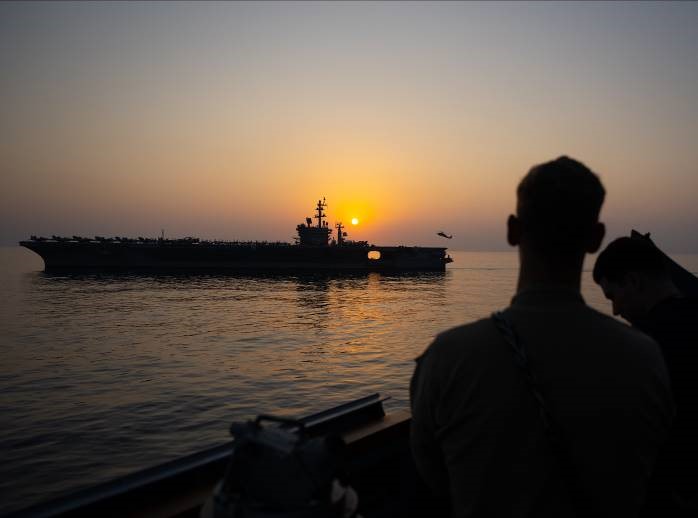
Needless to say, that would be highly bearish for oil prices because it would likely lead to an expansion in Iran’s oil production. But in case the two fail to agree on a deal, the potential for escalation remains active—and the prospect of a deal is also distant, despite this latest signal from Tehran. Indeed, last week saw oil prices make gains on reports that the U.S. was building a substantial military presence in the Persian Gulf, signaling it was prepared for an extended conflict with Iran—and that extended conflict significantly raises the risk of oil infrastructure getting targeted and disrupting Iran’s production of crude, currently at some 3.2 million barrels daily. The extended conflict scenario also increases the risk of other Middle Eastern oil producers getting drawn into the fighting as targets for strikes, facing potential disruption to their oil infrastructure.
Yet events from last year suggest that no one in the Middle East really wants oil prices to go through the roof. Higher is better up to a point, and while oil demand is among the least elastic in the world, it still responds to price shocks. Some analysts point to China’s oil storage spree as grounds for arguing there will be no oil price shock. China is the world’s largest importer of crude, it is the biggest buyer of Iranian crude, and it has been buying more oil than it has been refining for over a year—and building new storage to keep doing the same. China, in other words, is insulating itself against just such price shocks. The rest of the world, however, doesn’t really have China’s capacity to insulate itself. For the rest of the world—and for China, too—a geopolitical price shock would be painful.
By Irina Slav for Oilprice.com
More Top Reads From Oilprice.com
Geopolitical Tensions Fuel Massive Gold Reserve Accumulation Suriname’s Oil Boom Faces Economic Headwinds Despite Major Discovery China Hits Renewable Milestone, But Coal Isn’t Going Anywhere
Download The Free Oilprice App Today
Back to homepage
Irina Slav
Irina is a writer for Oilprice.com with over a decade of experience writing on the oil and gas industry.
More Info
Related posts
Leave a comment
https://oilprice.com/Energy/Energy-General/Oil-Bears-Are-Dangerously-Underestimating-Geopolitical-Risk.html